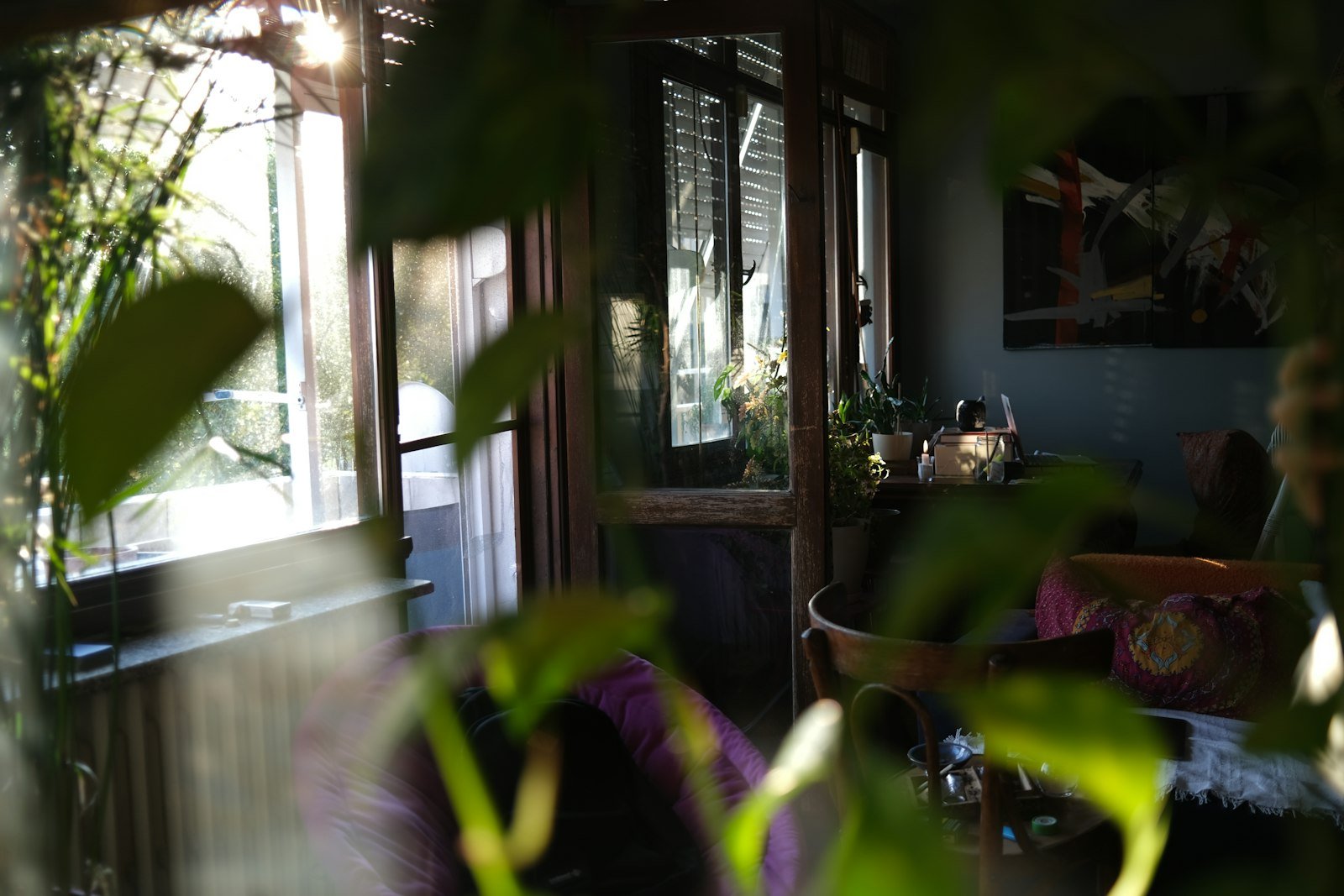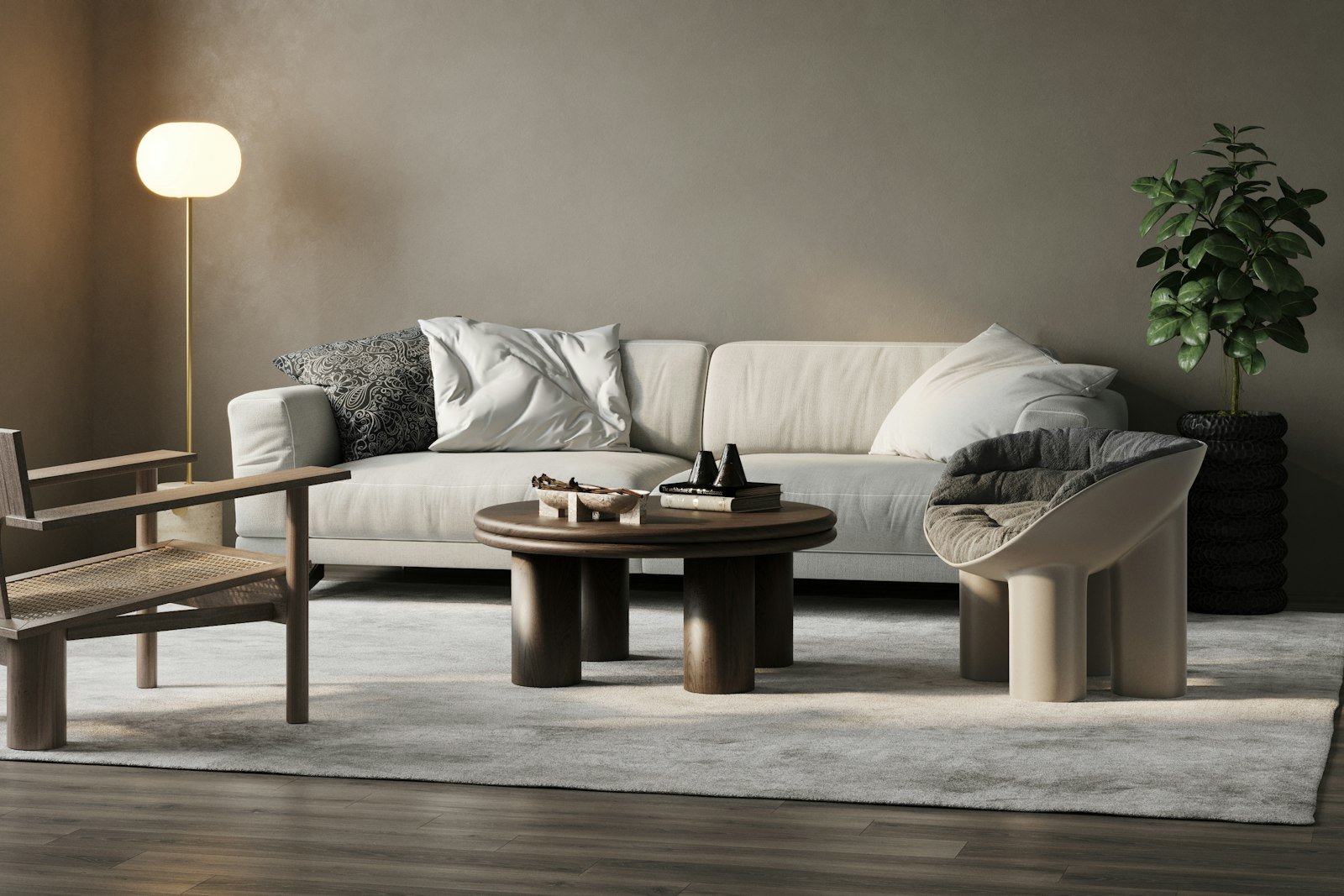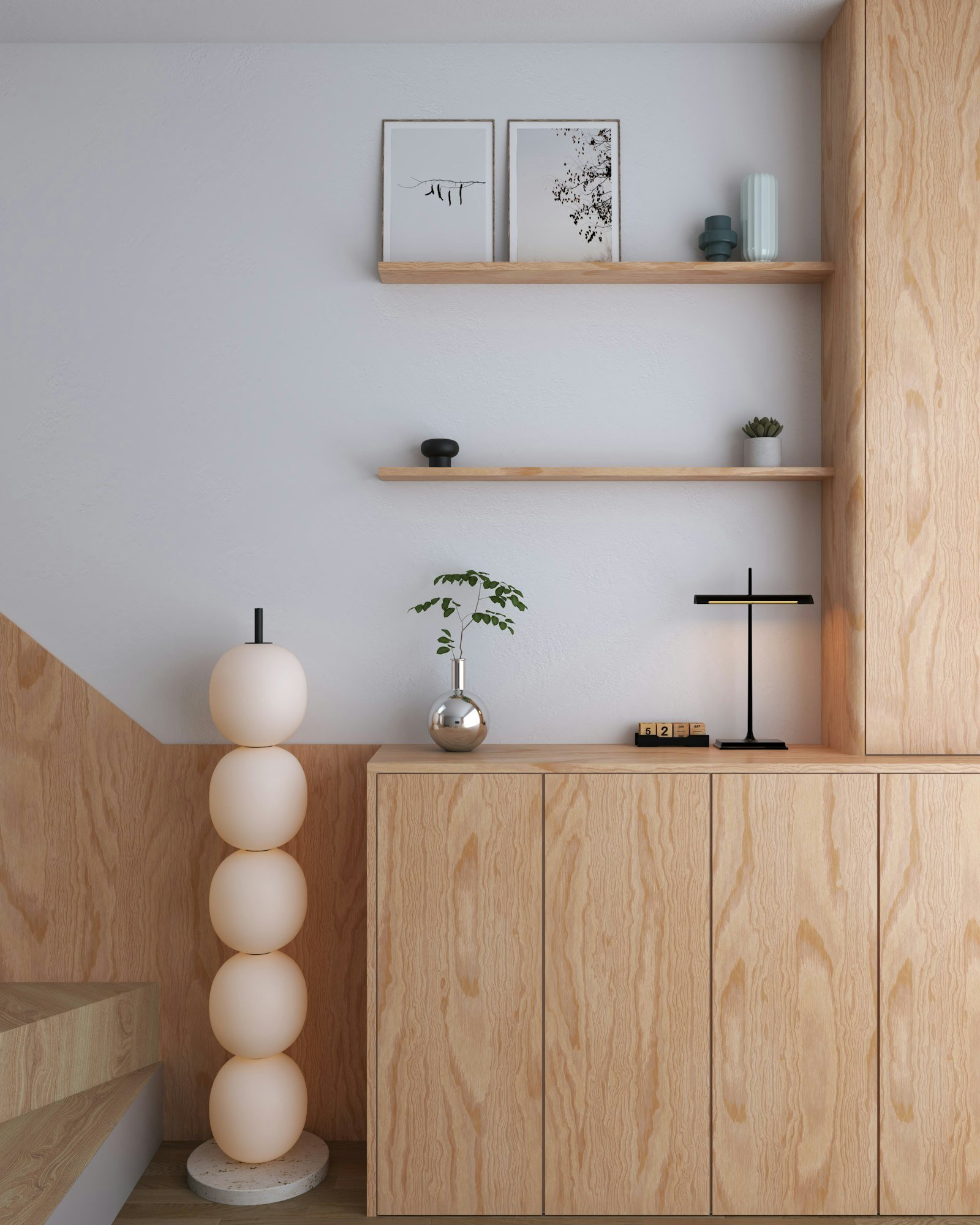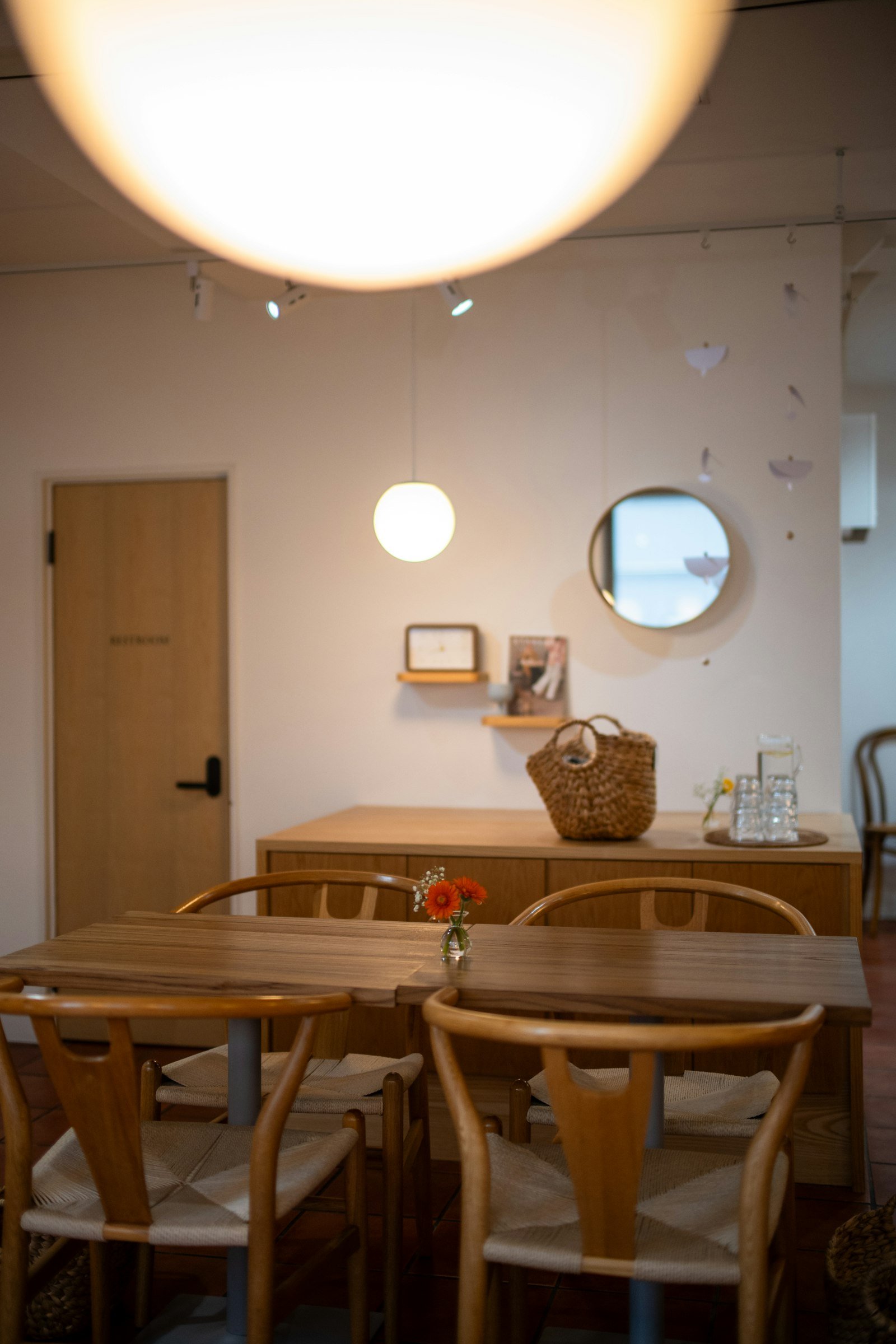
Picture the coziest room you’ve ever spent time in. What comes to mind first? Rarely the furniture — almost always the light. A table lamp’s warm glow on a rainy afternoon. Candlelight flickering across a dinner table. Soft morning sun filling a room.
We’ve been sold a misleading idea about lighting: that its only job is to make things visible. So we install a single blinding fixture in the center of the ceiling, flip it on, and call it done. The room is lit, but its mood has been erased — atmosphere traded for interrogation-room brightness.
Light is far more than utility. It’s the invisible architecture of a room — it defines shape, creates depth, sets emotion, and guides the eye. It can make a space feel spacious or intimate, energizing or calm, cheap or luxurious. Good lighting isn’t a finishing touch — it’s foundational to how a room actually feels.
Understanding Your Basic Tools
Before designing anything, it helps to understand light’s basic properties.
- Color temperature (measured in Kelvins): how warm or cool light appears.
- 2700K–3000K, warm white: the golden glow of sunrise or an old incandescent bulb — the range for coziness and intimacy, ideal for living rooms, bedrooms, and dining rooms.
- 3500K–4000K, neutral white: clean and clear, good for task areas like kitchens, bathrooms, and home offices.
- 5000K–6500K, daylight: the harsh blue-white of midday sun — best avoided indoors, since it feels clinical, boosts alertness at the wrong times, and does no favors to skin tones.
- Rule of thumb: stick to 2700K–3000K for roughly 90% of your home.
- Brightness and dimming: more lumens means brighter light, but the real transformation comes from a dimmer switch — light should flex with the time of day and mood.
- Color Rendering Index (CRI): a 0–100 scale measuring how accurately a light source reveals true colors. Sunlight sits at 100; a cheap bulb might land around 70, dulling colors noticeably. Aim for a CRI of 90+ — it’s the difference between vibrant and dingy.
Layer Your Light Like an Orchestra
Forget a single overhead fixture — great lighting comes from three distinct layers working together.
Ambient Light: The Foundation
This is your general background illumination — soft, diffuse, and shadow-free.
- Avoid: a single central ceiling fixture or harsh recessed cans, which create flat, unflattering glare.
- Use instead: light bounced off surfaces — wall sconces washing light up or down, hidden LED strips in molding, or a floor lamp aimed toward a corner or ceiling.
Task Light: The Purpose
Focused, bright light for specific activities — reading, cooking, working.
- The rule: light the task, not the room — position it from the side or front to avoid shadows.
- Good options: adjustable desk lamps, under-cabinet kitchen lighting (essential for eliminating counter shadows), swing-arm lamps by a bed or reading chair, and focused pendants over a kitchen island or dining table.
Accent Light: The Drama
Its job is to draw the eye toward what you love.
- Picture lights over artwork.
- Track lighting or adjustable spots to graze a textured wall or highlight a sculpture.
- In-cabinet lighting to make glassware glow.
- Candles and fairy lights for organic, flickering warmth.
The formula that works: a well-designed room uses all three layers, controlled by dimmers, creating an environment that can shift to match the moment.
How Direction Changes the Feel of a Room
- Downlighting: focused pools of light — dramatic, but can create harsh shadows.
- Uplighting: bounces off the ceiling, making a room feel taller and airier.
- Front lighting: evenly illuminates faces and objects — ideal for bathroom mirrors.
- Backlighting: creates silhouettes and drama, like a glowing halo behind a shelf or headboard.
- Grazing: placing a light close to a textured surface (brick, stone, shiplap) exaggerates every groove.
- Washing: flooding a wall evenly makes it recede, helping a small room feel larger.
Room-by-Room Lighting
Living Room
- Skip the overhead fixture for everyday use.
- Arrange three light sources — a floor lamp, table lamp, and sconce — in a triangle around your seating for balanced light.
- Use accent lighting on a fireplace, artwork, or bookshelf.
- Dimmers make everything more flexible.
Kitchen
- Ambient: dimmable overhead fixtures.
- Task: under-cabinet lighting is arguably the single most impactful kitchen upgrade, along with pendants over an island.
- Accent: in-cabinet lighting or toe-kick lighting for a soft glow at night.
Bedroom
- Keep it to warm 2700K light, no exceptions.
- Give each side of the bed its own dimmable light — wall-mounted sconces or swing-arm lamps free up nightstand space.
- A corner floor lamp with an upward shade adds soft ambient glow.
Bathroom
- Avoid a single bulb directly above the mirror, which casts unflattering shadows — sconces or vertical strips on both sides of the mirror, at eye level, work best.
- A dimmable, water-rated ceiling light for ambient light.
- A small dimmable LED for nighttime visits.
Light Is Something You Choreograph
Lighting isn’t a final touch — it’s the underlying choreography of how you actually experience your home, the difference between seeing a space and truly feeling it.
Try it tonight: turn off the main overhead, switch on a floor lamp, light a few candles, and watch the room transform as corners soften and textures come alive.
Walk through each room and ask:
- Do I have all three layers — ambient, task, and accent?
- Are my bulbs warm and high-CRI?
- Do I have dimmers?
- Is light coming from multiple directions to shape the space?
You’re not just installing fixtures — you’re shaping the atmosphere your life happens in.
Common Questions
I rent and can’t rewire anything — what can I do?
Plug-in solutions go a long way. For ambient light, try a torchiere floor lamp bouncing light off the ceiling, or plug-in sconces that hang from a picture hook. For task light, classic table lamps or plug-in swing-arm lamps work well. For accent light, battery-powered LED puck lights or plug-in picture lights are easy additions. Smart plugs or smart bulbs let you dim and adjust color temperature from your phone without touching any wiring.
How many light sources is too many for one room?
There’s no fixed number — the real question is whether you can control them independently to create different moods. A living room might have eight sources (lamps, sconces, a hidden LED strip), but if each is on its own dimmer, you can create a quiet reading scene, a lively dinner-party scene, or a relaxed movie-night scene. It’s about flexibility, not sheer quantity.
My house is full of harsh recessed “can” lights — how do I fix that?
Start by swapping in warm, high-CRI bulbs on a dimmer. Then treat the cans as your ambient base and build around them — add lamps at human height to bring light down into the room, use directional trims to aim can light at walls or art instead of straight down, and in some spots (like over a sofa) simply leave the cans off and rely on lamps instead.
How do I light a dark, windowless hallway or bathroom?
Aim for intentional and atmospheric rather than cave-like. Multiple wall sconces at intervals create a rhythmic, welcoming path. A deep, rich wall color paired with focused sconces can turn a hallway into a dramatic little gallery. In a windowless bathroom, a large mirror lit well from the sides will reflect and effectively double your available light.
What’s the single easiest change to make today?
Add a dimmer to whatever light you use most, and swap in a warm-white (2700K), high-CRI bulb. That one change does more to transform a room’s mood than almost anything else on this list.