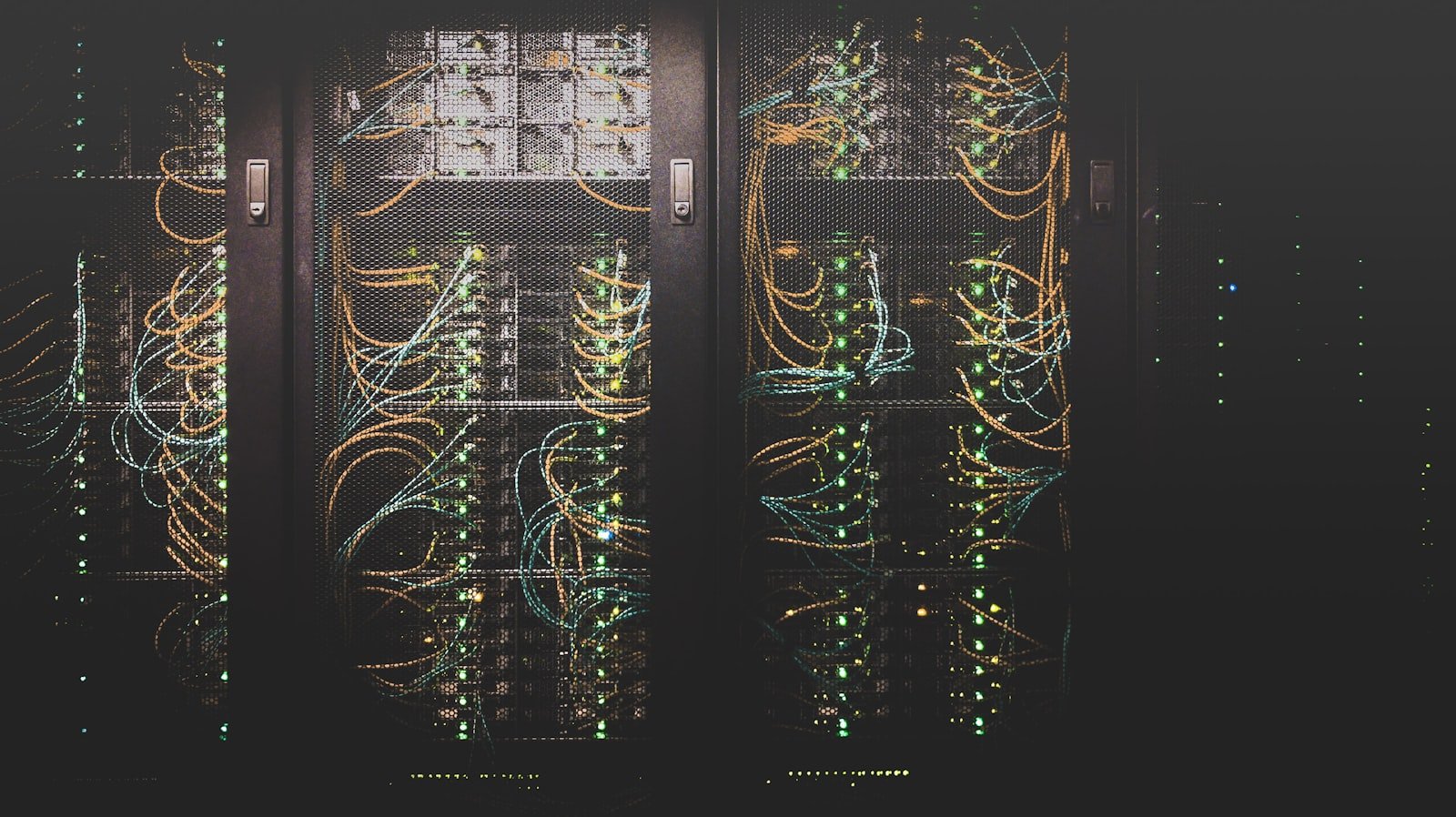
Picture every email you’ve ever sent, every video streamed, every playlist looped in the background — and imagine each one leaving behind a tiny puff of carbon dioxide. The “cloud” where all of this lives isn’t some abstract, weightless space. It’s a physical network of warehouses packed with servers and industrial cooling systems, drawing enough electricity to power entire cities.
We tend to think of our digital lives as clean, but they rest on a genuinely massive industrial machine. The tech sector is estimated to account for roughly 2–4% of global greenhouse gas emissions — comparable to the entire aviation industry — and as AI, 5G, and streaming keep expanding, that number is set to grow.
But a quieter shift is happening inside the engine itself: a growing number of developers are embracing what’s often called sustainable software engineering, or green coding. The goal isn’t offsetting emissions after the fact — it’s preventing them from being generated in the first place, by building a leaner, more efficient digital world from the ground up.
Why Software Uses So Much Energy
Tech’s carbon footprint comes from three main layers: data centers (the servers and cooling systems behind everything), networks (cables, towers, routers moving data around), and end-user devices. Software is what dictates how hard all three layers actually have to work.
The Bloat Problem
For years, the priority in software was simply “make it work, make it fast for the user, add more features” — cheap, abundant computing meant efficiency rarely mattered. The result is software bloat: a modern webpage might load megabytes of scripts, oversized images, and trackers from a dozen companies just to display a few paragraphs of text. Every byte transferred and every processing cycle spent rendering it consumes energy somewhere down the chain.
AI’s Growing Energy Appetite
The scale jumps dramatically with AI. Training a single large model can consume more electricity than 100 US homes use in a year, and generating one AI image can take as much energy as charging a smartphone. As AI gets woven into more everyday tools, making these models more efficient becomes less of a nice-to-have and more of a real environmental priority.
The Core Principles of Green Coding
At its heart, green coding adds a new criterion to the developer’s job: carbon efficiency — achieving the same result with meaningfully less computational work.
Carbon Awareness
The cleanest energy is the energy never used; the next best is renewable energy used at the right time. Some systems now schedule heavy jobs, like data backups or model training, for hours when solar or wind power is more abundant on the grid, or route requests to data centers currently running on cleaner power sources.
Performance Efficiency
- Better algorithms: a well-designed algorithm can solve a problem in seconds where a sloppy one takes hours on identical hardware.
- Caching and lazy loading: avoiding repeated fetches of the same data, and loading heavy content like video only when a user actually requests it.
- Leaner assets: compressed images, minified code, and pruned unused features all reduce how much an application actually has to move and process.
Hardware Efficiency
Well-written software lets hardware rest when it can — avoiding constant background animations that keep a device’s processor active, and using data structures that minimize the work needed to find and retrieve information.
How Developers Are Putting This Into Practice
- Server-side rendering in modern frameworks sends lighter, pre-built pages to users instead of bulky client-side scripts.
- Performance budgets set hard limits — a homepage that must load in under two seconds on a slow connection — which forces efficiency by design.
- Carbon estimation tools are emerging to quantify the emissions of specific software processes or cloud usage, making an otherwise invisible cost visible.
- Leaner AI models are an active area of research — techniques like pruning and quantization strip unnecessary complexity from large models while preserving most of their capability.
Why This Also Makes Business Sense
- Lower costs: less computational work directly translates into lower cloud bills.
- Better performance: efficient code tends to be fast code, and users — and search rankings — both favor speed.
- Wider reach: lean software runs better on older devices and slower connections, expanding the potential audience.
- Talent and brand appeal: sustainability is an increasingly meaningful draw for developers who want their work to matter beyond the paycheck.
What Users Can Do Too
- Stream in standard rather than 4K when watching on a phone screen — it uses a fraction of the data and energy.
- Clear out digital clutter — old emails with large attachments, unread newsletters, unused cloud storage all require ongoing power to keep stored.
- Keep devices longer — manufacturing a new phone carries a large carbon cost, so extending a device’s life a couple of extra years meaningfully reduces personal impact.
- Favor providers transparent about renewable energy use in their data centers.
Sustainability as a Core Feature, Not an Afterthought
The climate challenge is, at its root, a problem of overconsumption, and our digital lives are very much part of that consumption despite their virtual appearance. Green coding is really a return to good engineering craft — elegance, simplicity, doing more with less — applied with an eye toward the real-world energy each line of code commands.
The most meaningful tech advances going forward probably won’t just be faster or more feature-rich — they’ll be the ones that deliver what people need while treading more lightly on the systems that power them.
Common Questions
Does turning off my computer at night actually help?
A little, but the bigger lever is online behavior — the energy a personal device uses is small compared to what data centers and networks consume serving requests. Streaming in lower resolution or clearing out cloud storage has a larger systemic effect by reducing demand on the infrastructure behind the screen.
Is “green” software less capable or feature-poor?
Not at all — it’s closer to a well-tuned engine versus a poorly tuned one, delivering the same output using less fuel. Green software removes waste — redundant code, inefficient processes — not useful functionality.
How can I tell if a website is built efficiently?
There’s no universal certification yet, but website carbon calculators can estimate a page’s emissions per view, and performance auditing tools like PageSpeed Insights are a decent proxy — fast, high-scoring sites tend to be more energy-efficient than slow, bloated ones.
Isn’t cryptocurrency mining the real problem here?
Proof-of-work cryptocurrencies like Bitcoin are intentionally energy-intensive and represent a genuinely large, specific issue — sometimes using more electricity than entire countries. That’s a distinct problem from everyday software inefficiency, though newer proof-of-stake cryptocurrencies use dramatically less energy.
I’m a developer — where do I start with this?
Begin by measuring your application’s actual resource usage, then optimize the basics — compress images, minify code, implement caching. From there, research the efficiency implications of your chosen frameworks and algorithms, and bring carbon efficiency into team conversations alongside the usual priorities of user experience and security.