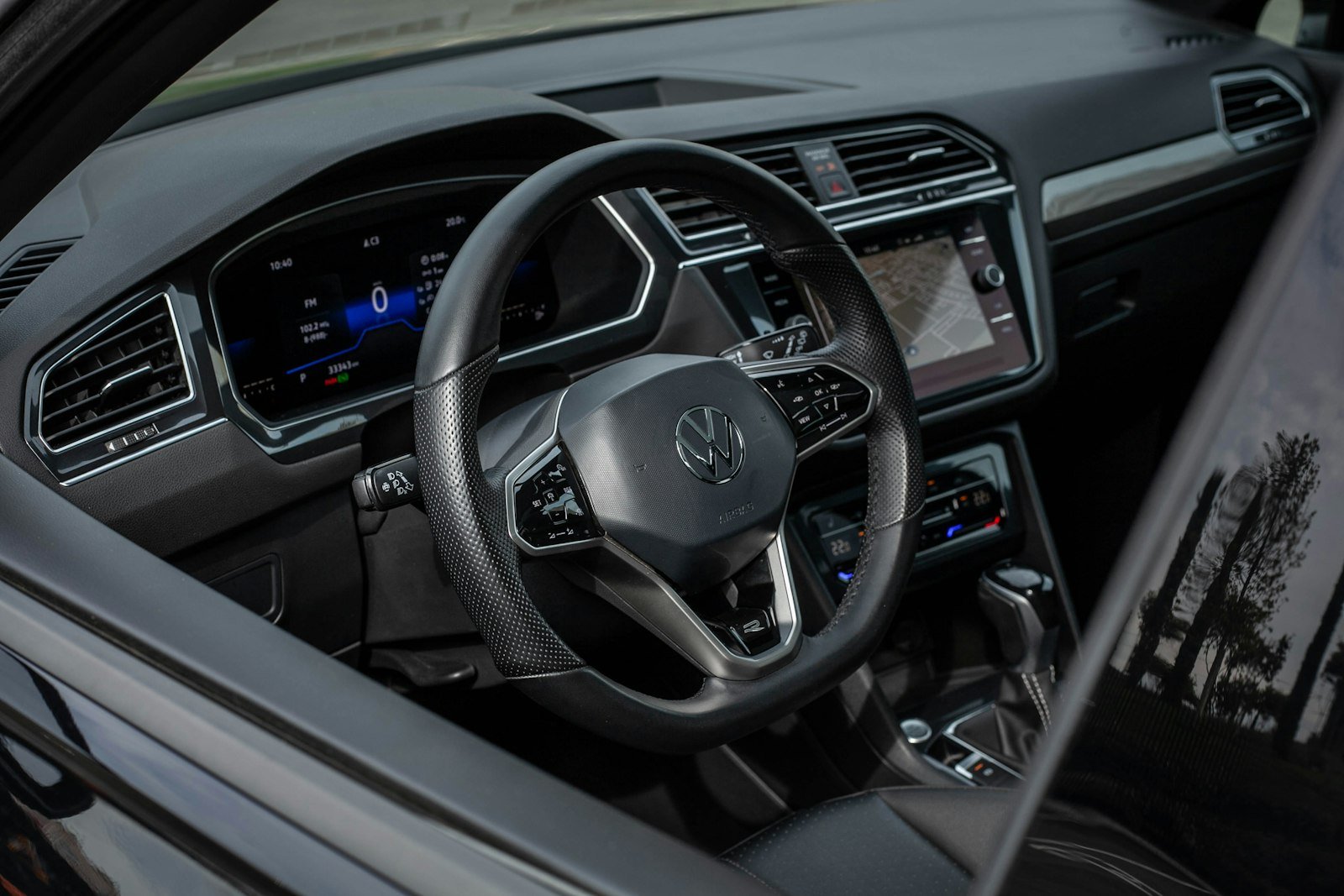
For a hundred years, a car’s identity lived in its metal: pistons firing, valves opening, horsepower on tap. Drivers judged a vehicle by the growl of its engine and the mechanical feedback through the wheel. That era is quietly ending. The mechanical core hasn’t disappeared, but it’s no longer where the magic happens — a digital layer has taken over as the car’s true identity.
What will matter most in your next vehicle isn’t displacement or cylinder count — it’s processing power, software sophistication, and how well the car stays connected. We’ve moved from an age of mechanical engineering into one of automotive computing, where the car increasingly resembles a smartphone that happens to have wheels. Here’s how code quietly took the wheel.
1. Software-Defined Vehicles: A New Kind of Chassis
Traditionally, a car’s abilities were fixed on the assembly line. Wanted brighter headlights or a punchier engine? Your only option was buying a different car.
That’s changed with the rise of the Software-Defined Vehicle (SDV), where brakes, powertrain, climate, and infotainment are all governed by powerful central computers running millions of lines of code. This unlocks two big shifts:
- Updates that arrive overnight: Just like a phone, the car keeps improving after you buy it. Tesla popularized this with additions like “Dog Mode” and range gains delivered purely through software — and traditional automakers are scrambling to match it.
- Features you unlock, not just buy: Heated rear seats before a road trip, a temporary acceleration boost, or extra driver-assist tools might come as a monthly subscription or a one-off purchase through an in-car app store — the hardware was already installed; software just switches it on.
In short, what your car can do is no longer fixed at purchase — it’s ongoing, adjustable, and personal.
2. A Car That Talks: Connectivity and the Living Map
A modern software-driven car isn’t isolated — it’s woven into a connected environment.
- Vehicle-to-everything (V2X) communication: Cars exchange signals with other vehicles, traffic infrastructure, and even nearby pedestrians’ phones.
- If a car several blocks ahead slams the brakes, yours can pre-charge its own braking system and warn you before you ever see taillights.
- A traffic signal can broadcast its timing so your car eases into a “green wave,” smoothing traffic and saving fuel.
- Crowdsourced, real-time mapping: Data pooled from millions of connected cars builds a “living map” that’s more current than satellite GPS could ever be — flagging fresh potholes, patches of black ice, or an accident moments after it happens, and rerouting other cars instantly.
Every connected car effectively becomes a sensor, feeding a shared intelligence that makes roads safer and traffic smoother for everyone.
3. The Quiet Co-Driver: ADAS and the Road to Autonomy
The clearest sign of this software takeover is Advanced Driver-Assistance Systems (ADAS) — intricate software stacks that interpret streams of data from cameras, radar, and LiDAR.
- Adaptive cruise control that handles stop-and-go traffic without driver input.
- Lane-keeping assist that nudges the wheel back on course.
- Automatic emergency braking that reacts to a pedestrian faster than a human might.
These features are the stepping stones toward full autonomy. The remaining challenge isn’t the sensors — those are largely mature. It’s an artificial intelligence problem of enormous scale: teaching software to anticipate human behavior, handle near-infinite edge cases, and make split-second calls with ethical weight.
Whoever wins the race to autonomous driving will win it in code, not hardware.
4. Your Personal Cocoon: The Cabin as a Digital Space
As software takes on more of the driving itself, the cabin turns into a space built around you.
- Recognized on entry: Whether through your phone, your face, or a key fob, the car identifies you and instantly resets the seat, mirrors, climate, music, and even how it drives to match your saved profile.
- Your digital life, carried over: Calendars suggest when to leave, podcasts pick up exactly where you paused, and your phone’s navigation appears seamlessly on the dashboard — the car becomes another device synced to your life.
- The emerging “third space”: As autonomy advances, the cabin can shift into a rolling office, a place to unwind, or simply somewhere quiet to rest — all orchestrated by software managing the environment.
5. The Trade-Offs: Bugs, Breaches, and Who Owns the Data
This shift doesn’t come free of new risks.
- A crash you can’t reboot from: Software has bugs, and a glitch in a powertrain controller carries far higher stakes than a frozen laptop. Redundancy and rigorous testing become matters of safety, not convenience.
- A target for hackers: A connected car is, at its core, a networked computer — and networked computers attract attackers. Automakers now rely on “ethical hackers” who continuously hunt for weak points.
- Data ownership questions: Every drive generates terabytes of information about your habits, routes, and timing. That data has real value — but it’s still unclear whether it belongs to you or the manufacturer, and how it’s safeguarded.
The Takeaway: A Driver You Download
We’ve reached a turning point where a car’s worth is separating from its sheet metal and settling into its code. The winners of the next automotive era won’t be the companies with the best transmissions — they’ll be the ones with the most secure, capable software.
Expect your next car to be judged less by its 0-60 time and more by how often it updates, how well it connects, and how smart its algorithms are. It will be less a fixed machine and more an evolving platform that learns your habits and participates intelligently in traffic around it.
The soul of today’s car isn’t under the hood anymore — it’s in the cloud, refined by engineering teams, and quietly downloaded to your garage overnight. This revolution doesn’t roar. It updates silently, one line of code at a time.